Fixed Deposits Are Stable. But Are They Right for You?
A fixed deposit can be a good place for money you want to keep away from market swings. But the interest rate is not the only thing to look at. Tenure, tax, interest payout, early withdrawal and access to your money can all change whether an FD actually fits your plan.
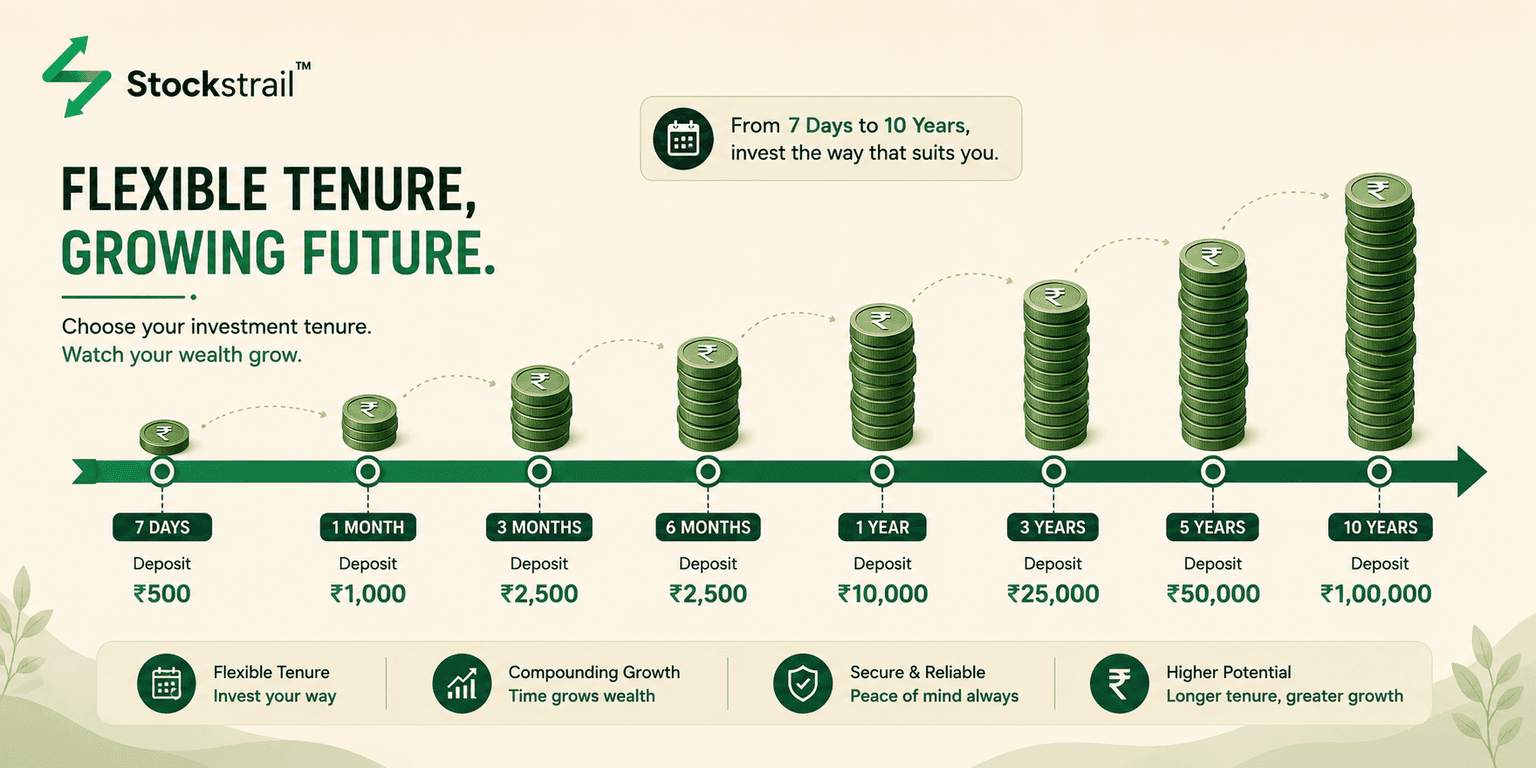

What is a Fixed Deposit?
A Fixed Deposit (FD) is a bank deposit in which you place a lump sum for a chosen tenure at an interest rate specified when the deposit is opened. The deposit is intended to be held until maturity, when the principal and applicable interest are paid according to the deposit terms.
Because the interest rate is fixed according to the FD terms, the maturity value can be easier to plan for than market-linked investments. However, the actual return you receive can be affected by factors such as premature withdrawal, tax and the bank's deposit conditions.
FDs can be useful for money assigned to a known time horizon, regular-income needs or conservative savings. They are not automatically the best choice for every goal, so the tenure, liquidity requirement, tax impact and alternatives should be considered before investing.
If you are comparing FDs with market-linked options, explore ourMutual Funds guide. You can also use ourfinancial calculatorsto understand numbers before making a decision.
Why Invest in Fixed Deposits?
Predictable Interest
The interest rate is specified when the FD is opened, helping you estimate the maturity value according to the deposit terms.
Low Market Volatility
Unlike market-linked investments, a standard fixed-rate FD does not change in value because stock or bond prices move.
Choose Your Tenure
Banks offer different deposit tenures, allowing you to match the FD to a planned time horizon.
Regular or Maturity Income
Depending on the deposit, interest may be paid periodically or accumulated and paid with the principal at maturity.
Useful for Planned Goals
An FD can be considered for money earmarked for known expenses when capital stability and a defined time horizon are important.
DICGC Protection
Eligible deposits with an insured bank are covered by DICGC up to ₹5 lakh per depositor per bank, including principal and interest, subject to the applicable rules.
Types of Fixed Deposits to Know
Regular Fixed Deposit
A standard FD where you deposit a lump sum for a chosen tenure at an interest rate specified by the bank.
Suitable for: Suitable when you want predictable interest and a defined maturity date.
Tax-Saving Fixed Deposit
An FD with a five-year lock-in that may qualify for deduction under Section 80C, subject to applicable tax rules.
Suitable for: Useful for eligible taxpayers who want a tax-saving investment with a fixed lock-in.
Senior Citizen Fixed Deposit
Many banks offer an additional interest rate for eligible senior citizens, with the actual rate depending on the bank and deposit terms.
Suitable for: May suit eligible senior citizens looking for predictable interest or regular income.
Looking at the wider picture? Compare this with ourMutual Funds optionsand use ourcalculatorsbefore choosing where the money should go.
How Fixed Deposits Work
Select the investment amount and tenure.
Deposit the lump sum in the FD account.
Bank pays interest at a fixed rate.
At maturity, receive principal + interest.
Renew or withdraw the FD.
Interest Payout Options
Cumulative FD
Interest is accumulated during the deposit tenure and paid along with the principal at maturity, according to the bank's deposit and compounding terms.
Best for: People who do not need regular interest income and want to receive the accumulated amount at maturity.
Non-Cumulative FD
Interest is paid periodically according to the payout frequency selected under the deposit terms, such as monthly, quarterly, half-yearly or annually.
Best for: People who prefer periodic interest income instead of waiting until maturity.
Fixed Deposit Interest & Maturity Examples
Example 1: Simple One-Year FD
Illustration: ₹1,00,000 deposited for 1 year at a hypothetical 7% annual interest rate. If the deposit terms use annual interest for this example, the interest would be ₹7,000 and the maturity amount would be ₹1,07,000.
Example 2: Cumulative FD
Illustration: ₹5,00,000 deposited for 3 years at a hypothetical 7.5% annual rate with quarterly compounding. The maturity amount would be approximately ₹6.25 lakh, before considering any applicable tax.
Example 3: Non-Cumulative FD
Illustration: ₹2,00,000 at a hypothetical 8% annual rate. The annual interest would be ₹16,000, or about ₹1,333 per month if the bank's payout frequency and terms provide monthly interest.
Illustrative only
These examples use hypothetical interest rates to explain how FD interest and maturity values can work. Actual rates, compounding frequency, payout method and maturity amount depend on the bank, deposit type and applicable terms. Tax may also affect the post-tax return.
If you are deciding between predictable deposits and market-linked options, read ourMutual Funds guidefor a broader comparison.
Fixed Deposit Premature Withdrawal: What Happens If You Need Your Money Early
Premature withdrawal may be allowed, but the applicable conditions depend on the bank and the specific FD.
The interest payable on early withdrawal may be lower than the original contracted rate, depending on the bank's terms and the period the deposit remained with the bank.
A premature-withdrawal penalty may apply. Banks must have a Board-approved policy and disclose the applicable penalty components to depositors.
Before breaking an FD early, check the withdrawal rules, revised interest rate, penalty and tax implications so you know the actual amount you will receive.
Before breaking an FD, estimate the impact on your overall plan with ourcalculatorsand review the deposit provider's current terms.
Who May Consider a Fixed Deposit?
An FD can be useful when you know when the money may be needed and want predictable interest. The right choice still depends on your liquidity needs, tax situation, tenure and financial goal.
Money Needed for a Known Goal
An FD may suit money set aside for a planned expense with a reasonably clear time horizon, such as education, a vehicle purchase or another upcoming financial commitment.
People Who Prefer Predictable Interest
If you do not want the value of this portion of your savings to move with market prices, an FD can offer a defined interest rate under the deposit terms.
Senior Citizens Seeking Regular Income
Eligible senior citizens may consider FDs when predictable interest income is important, with the actual rate and payout options depending on the bank and deposit terms.
Investors Building a Fixed-Income Allocation
An FD can be one component of a broader financial plan for people who want some money in deposits while keeping other investments aligned with different goals and risk levels.
People Parking Surplus Money Temporarily
If you have surplus money that is not needed immediately but has a defined future purpose, an FD may provide a straightforward way to earn interest for the chosen period.
People Comfortable With a Fixed Tenure
FDs may work better when you can reasonably commit the money for the selected tenure and understand the consequences of withdrawing before maturity.
Important: An FD is not automatically the right choice for every financial goal. If you may need the money at short notice, compare liquidity options before locking funds into a fixed tenure.
Why Choose Stockstrail for Fixed Deposits?
Compare Available FD Options
We help you compare available FD options based on tenure, interest payout, maturity needs and other relevant deposit terms.
Goal-Based Guidance
We help you think about the purpose and time horizon of the money before choosing an FD tenure or payout structure.
Clear Rate & Tenure Explanation
We explain the applicable interest rate, tenure, payout method and key deposit conditions before you proceed.
Simple Digital Process
Get help through the application and documentation process so you can complete your FD setup with less friction.
Maturity & Renewal Support
We can help you review maturity dates and think through your next step when an FD comes due.
Practical, No-Pressure Guidance
We focus on your goal, liquidity needs and time horizon rather than presenting one FD as the right choice for everyone.
How to Start a Fixed Deposit
Decide the deposit amount.
Select tenure (3m, 6m, 1y, 3y, 5y, etc.).
Choose cumulative or periodic payout.
Complete the FD application with Stockstrail.
Receive FD receipt with maturity details.
Fixed Deposit FAQs
Practical answers to common FD questions about liquidity, tax, loan options, lock-in periods and choosing the right deposit.
I need money before my FD matures. Should I break the FD or take a loan against it?
Do not automatically break the FD. Compare the premature-closure penalty and revised interest you may lose with the interest cost of a loan or overdraft against the FD. A loan against FD can be worth considering when you need short-term liquidity and want to keep the deposit running, but availability and pricing depend on the bank and FD type.
What happens if I withdraw my FD before maturity?
Premature withdrawal is allowed for many callable FDs, but the bank may reduce the interest rate applicable to the period the deposit was actually held and may charge a penalty. Tax-saver and non-withdrawable FDs can have different restrictions, so check the specific deposit terms before closing it.
How is TDS on FD interest calculated, and can I avoid TDS?
TDS depends on the interest earned across eligible deposits and the applicable tax rules for the financial year. If you qualify for an exemption, Form 15G or Form 15H may be relevant, subject to the conditions in force. TDS is only a tax deduction at source; your final tax liability depends on your total taxable income.
Is a 5-year tax-saver FD really worth it if I may need the money earlier?
A tax-saver FD has a five-year lock-in and generally cannot be withdrawn early under normal circumstances. It may suit someone who has a genuine tax-planning need and can leave the money untouched, but it is not suitable for money that may be needed during the lock-in.
How much of my bank FD is insured if the bank fails?
Eligible bank deposits are covered by DICGC deposit insurance subject to the applicable rules and limit. The current insurance limit is up to ₹5 lakh per depositor per bank, including principal and interest, across eligible deposits in that bank. Deposit insurance does not mean every type of deposit or every financial product is covered.
Should I choose the highest FD interest rate or a shorter FD tenure?
Do not compare FD rates alone. Look at when you need the money, premature-withdrawal rules, payout frequency, tax impact, deposit insurance eligibility and the difference between the available tenures. A slightly lower rate can be more practical if it better matches your cash-flow needs.