Mutual Funds. Built Around Your Goals.
Whether you're starting a SIP or investing a lump sum, we help you explore mutual funds based on your goals, risk profile and investment horizon.

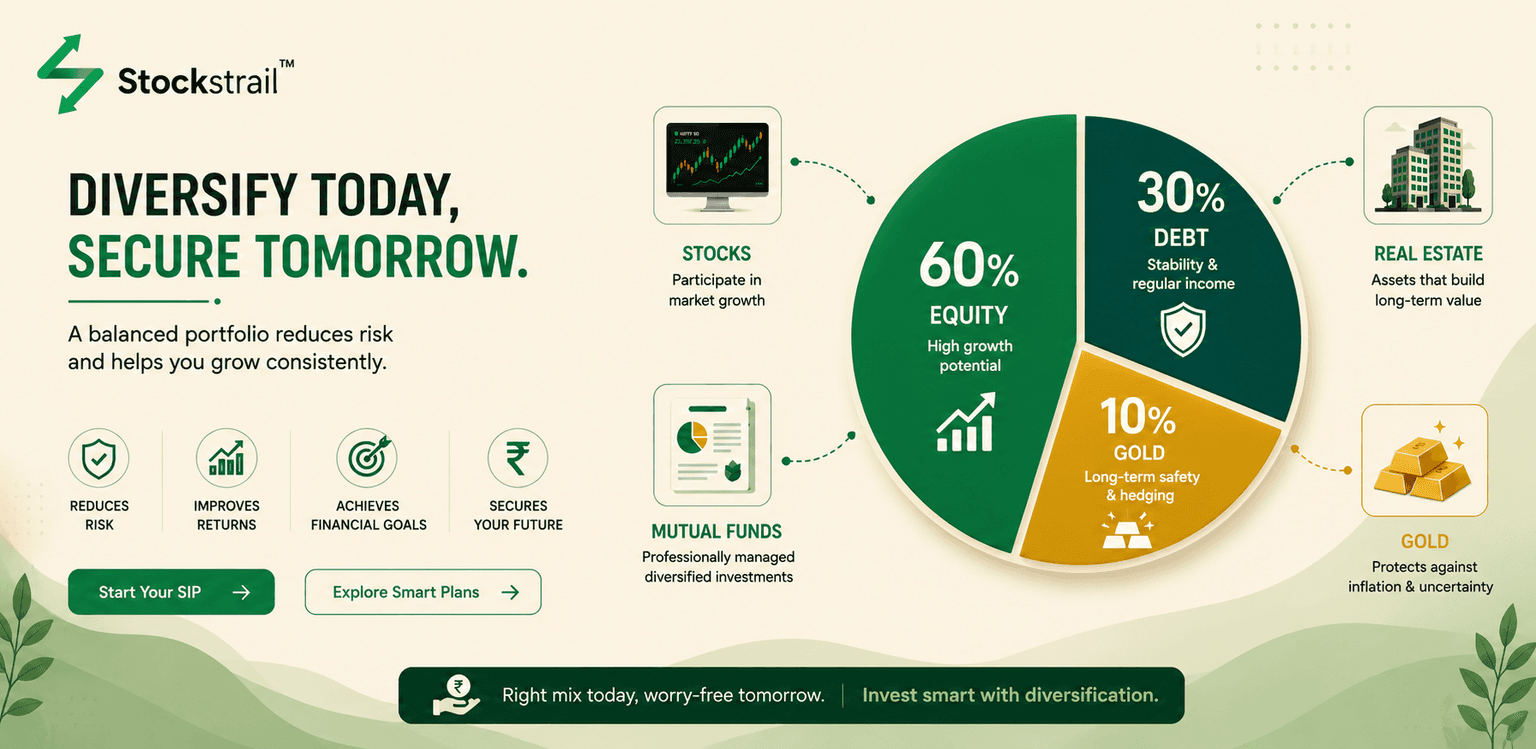
What is a Mutual Fund?
A mutual fund collects money from many investors and invests it in assets such as shares, bonds and other securities. The fund is managed according to a defined investment objective, so you do not have to choose every security yourself.
The important part is choosing a fund that fits what you are trying to do with the money. Your goal, investment period and comfort with market fluctuations all matter. Our risk profile assessment can help you understand how comfortable you are with investment risk before you start comparing funds.
You can invest through a SIP when you want to invest regularly, or use a lump sum when you already have money available. The right approach depends on your income, available savings, goal and time horizon. Before choosing where the money should go, you can also compare mutual funds with fixed deposits or speak with Stockstrail about your situation.
Why Invest in Mutual Funds?
Start Small, Invest Regularly
SIPs make it possible to start with a manageable amount and invest regularly without needing a large amount of money at once.
Professional Fund Management
Experienced fund managers research and monitor the portfolio according to the fund's investment objective, so you do not have to select every security yourself.
Diversification
A mutual fund can spread your money across multiple securities, companies, sectors and asset classes, reducing dependence on a single investment.
Funds for Different Needs
With equity, debt, hybrid and other mutual fund categories available, investors can choose based on their goals, risk profile and investment horizon. If you are comparing mutual funds with a more predictable deposit-based option, see our Fixed Deposit guide.
Easy Access
Open-ended mutual funds generally allow investors to redeem their units on business days, subject to the scheme's terms, exit load and applicable rules.
Wealth Growth
Mutual funds can help you build wealth over time through capital appreciation and, in some schemes, income distributions, depending on the investment and market performance.
Types of Mutual Funds
Equity Funds
Equity funds invest mainly in the shares of companies and are generally suited to investors seeking long-term growth who can accept market ups and downs.
Suitable for:
Investors with a longer time horizon who are comfortable with higher market fluctuations.
Risk level:
Generally higher than debt-oriented funds, depending on the specific scheme.
Debt Funds
Debt funds invest mainly in fixed-income securities such as government and corporate bonds, certificates of deposit and other debt instruments. They are generally considered for investors looking for relatively lower volatility than equity funds.
Suitable for:
Investors with short to medium-term goals who prefer relatively lower market volatility.
Risk level:
Generally lower than equity funds, but returns and value can still fluctuate with interest rates and credit conditions.
Hybrid Funds
Hybrid funds invest across a mix of equity and debt securities. By combining different asset classes, they can provide a balance between growth potential and the relatively lower volatility of debt-oriented investments. The right mix depends on your risk profile and investment horizon.
Suitable for:
Investors looking for a diversified approach and a balance between equity exposure and debt investments.
Risk level:
Varies by the fund's asset allocation and can range from relatively moderate to higher risk.
How Mutual Funds Work
You choose a mutual fund based on your investment goals, risk profile and time horizon.
You invest through a SIP or lump sum, and your money becomes part of the fund.
The fund pools money from many investors and invests it according to its investment objective.
A professional fund manager manages the portfolio and makes investment decisions within the fund strategy.
The value of your investment rises or falls based on the performance of the underlying securities and market conditions.
When you want to exit, you can redeem your units subject to the fund's terms, applicable charges and rules.
Want to understand mutual funds before you invest? Explore the free Stockstrail Learning courses on mutual funds and SIPs.
SIP vs Lump Sum
SIP (Systematic Investment Plan)
- ✓Investing a fixed amount at regular intervals, usually every month.
- ✓Start with an amount that fits your income and investment budget.
- ✓Regular investing can help build discipline and may benefit from rupee-cost averaging over time.
- ✓Useful when you want to invest gradually instead of putting a large amount in at once.
Example: If you invest ₹5,000 every month through a SIP, you continue investing the same amount regardless of whether markets are up or down. Over time, this can help you build an investment habit and accumulate units at different market prices.
Lump Sum Investment
- ✓Investing a larger amount in a mutual fund at one time
- ✓Useful when you have surplus money available for investment.
- ✓Can be considered when you have a suitable time horizon and can handle market fluctuations.
- ✓Works well for one-time amounts such as bonuses, savings or other available capital
Example: If you receive a ₹1,00,000 bonus and decide to invest it in a suitable mutual fund, investing the full amount at once is a lump sum investment. The outcome will depend on the fund, market conditions and how long you stay invested.
Want to see how different SIP amounts or investment periods could affect your numbers? Try our financial calculators.
Illustrative Examples
Example 1:
Suppose you start a SIP of ₹5,000 per month. Your total investment after 10 years would be ₹6,00,000. The value of your mutual fund investment may be higher or lower than this amount depending on market performance.
Example 2:
Investing ₹5,000 every month through a SIP for 20 years would mean a total contribution of ₹12,00,000. The final value of the investment will depend on the mutual fund's performance and market conditions.
Example 3:
Investing ₹1,00,000 in a mutual fund at one time is called a lump sum investment. The value of the investment can rise or fall with market conditions, so the outcome depends on the fund and the period you remain invested.
Disclaimer:
These examples are for educational purposes only and are intended to explain how SIP and lump sum investments work. Mutual fund investments are subject to market risks, and the value of your investment may go up or down depending on market conditions and the performance of the selected scheme.
Who Should Invest in Mutual Funds?
First-time investors looking to start with a SIP
Salaried professionals investing regularly from their income
Individuals planning for long-term financial goals
Parents building a fund for their children's future
Investors looking to diversify beyond traditional savings
Investors with a lump sum they want to invest for the long term
Before You Choose a Mutual Fund, Check These
A mutual fund can look attractive because of its recent return, but that is only one part of the picture. Look at what the fund owns, how much risk it takes, what the money is meant for and whether the fund actually fits your plan.
What is the fund actually investing in?
Two mutual funds can look similar from the outside but hold very different investments. Check whether the fund is mainly investing in large companies, mid and small companies, bonds, government securities or a mix of assets.
How much can the value move?
A mutual fund can lose value, and some funds can move much more than others. The Riskometer gives you a starting point, but you should also understand the type of assets and strategy behind the fund.
What happens if the fund owns too much of one area?
A fund may have a large exposure to one sector, a small group of companies or a particular type of security. Higher concentration can make the portfolio more dependent on how that part of the market performs.
What risks come with debt mutual funds?
Debt funds are not the same as fixed deposits. Their value can be affected by interest rate changes, the credit quality of the securities they hold and liquidity in the market. A lower volatility fund is not the same thing as a guaranteed-return product.
Are you choosing the fund because it recently did well?
A strong one-year or three-year return can attract attention, but past performance does not tell you what the fund will earn in the future. Look at the fund's objective, portfolio, risk and how it fits your investment plan.
Does this fund fit the money you are investing?
Money meant for an expense next year and money being invested for a long-term goal should not automatically be treated the same way. Match the fund with the purpose of the money and the time you can remain invested.
A simple way to start: Check the fund's objective, portfolio, Riskometer, investment horizon and major risk factors before investing. You can also take our risk profile assessment before comparing funds.
Mutual Fund investments are subject to market risks. Read all scheme related documents carefully before investing.
Why Choose Stockstrail for Mutual Funds?
AMFI-Registered
Registered with AMFI as a Mutual Fund Distributor, with a focus on clear and responsible distribution of mutual fund products.
Transparent Guidance
Clear recommendations based on your financial goals, risk profile and investment horizon, without relying on one-size-fits-all choices.
Fund Selection
Explore mutual fund options across equity, debt, hybrid and other categories based on your goals, risk profile and investment horizon.
SIP Planning
Build a SIP around your income, budget, goals and investment horizon, with the flexibility to adjust as your needs change.
Paperless Process
Complete your mutual fund investment process online with simple KYC and digital onboarding, wherever available.
Ongoing Support
Get continued support as your goals or circumstances change. When you need to review your investments or discuss a new financial decision, you can talk to Stockstrail and discuss what has changed.
How to Start Investing in 6 Simple Steps
Tell us about your goals, investment needs and basic details
Complete your KYC and risk-profile assessment
Choose between a SIP or lump sum based on your situation
Explore suitable mutual fund options based on your goals and risk profile
Complete the investment process online through Stockstrail
Review your investments as your goals and needs change
Looking at the Bigger Picture?
Mutual funds are only one part of a financial plan. These guides can help you understand the other decisions that may sit alongside your investments.
Check Your Risk Profile
Understand how much market risk you are comfortable taking before choosing a fund.
Financial Calculators
Work through SIP, investment and other numbers before making a decision.
Fixed Deposits
Compare a predictable deposit option when market-linked investments are not what you are looking for.
Insurance
Protect your income, family and health alongside your investments.
Loans
Explore borrowing options when you need funds without disrupting your financial plan unnecessarily.
Financial Protection
See how investments, insurance, savings and financial commitments fit together.
Mutual Fund FAQs
Can I stop or pause my SIP if I can't invest for a few months?
Yes. You can generally cancel a SIP, while a temporary SIP pause may also be available depending on the mutual fund scheme and the platform through which the SIP is registered. Stopping future SIP instalments does not automatically redeem the mutual fund units you already hold. The exact pause and cancellation rules can vary by scheme and platform.
What happens if the market falls after I start my SIP?
The value of your mutual fund investment can fall when markets decline. A market correction does not automatically mean that you should stop your SIP. Your decision should be based on your goals, risk profile and investment horizon rather than short-term market movements. A SIP continues according to its schedule unless you stop or pause it.
What is the difference between Direct and Regular Mutual Fund Plans?
Both Direct and Regular Plans invest in the same underlying mutual fund scheme and are managed by the same fund manager. Direct Plans do not involve a distributor and generally have a lower expense ratio, while Regular Plans include distribution expenses and are purchased through a mutual fund distributor. The choice should also consider the level of service and support an investor wants.
What is an exit load and when do I have to pay it?
An exit load is a fee that may apply when you redeem mutual fund units within a specified period. The amount and applicable period depend on the particular scheme, so always check the scheme's current exit-load terms before redeeming or switching. Not every mutual fund has the same exit-load structure.
Should I switch my mutual fund if another fund is performing better?
Not necessarily. Switching only because another fund has recently delivered higher returns can lead to unnecessary changes and may have tax or exit-load implications. Before switching, consider whether your existing fund still fits your goals, risk profile, investment horizon and the fund's investment objective rather than focusing only on recent performance.
How many mutual funds should I have in my portfolio?
There is no fixed number that is right for everyone. Adding more mutual funds does not automatically mean better diversification, especially when different funds have similar holdings or investment strategies. The number of funds should depend on your goals, risk profile, asset allocation and investment horizon.